Key takeaways
- Proposition 36 took effect December 18, 2024, allowing felony charges for certain repeat theft and drug offenses.
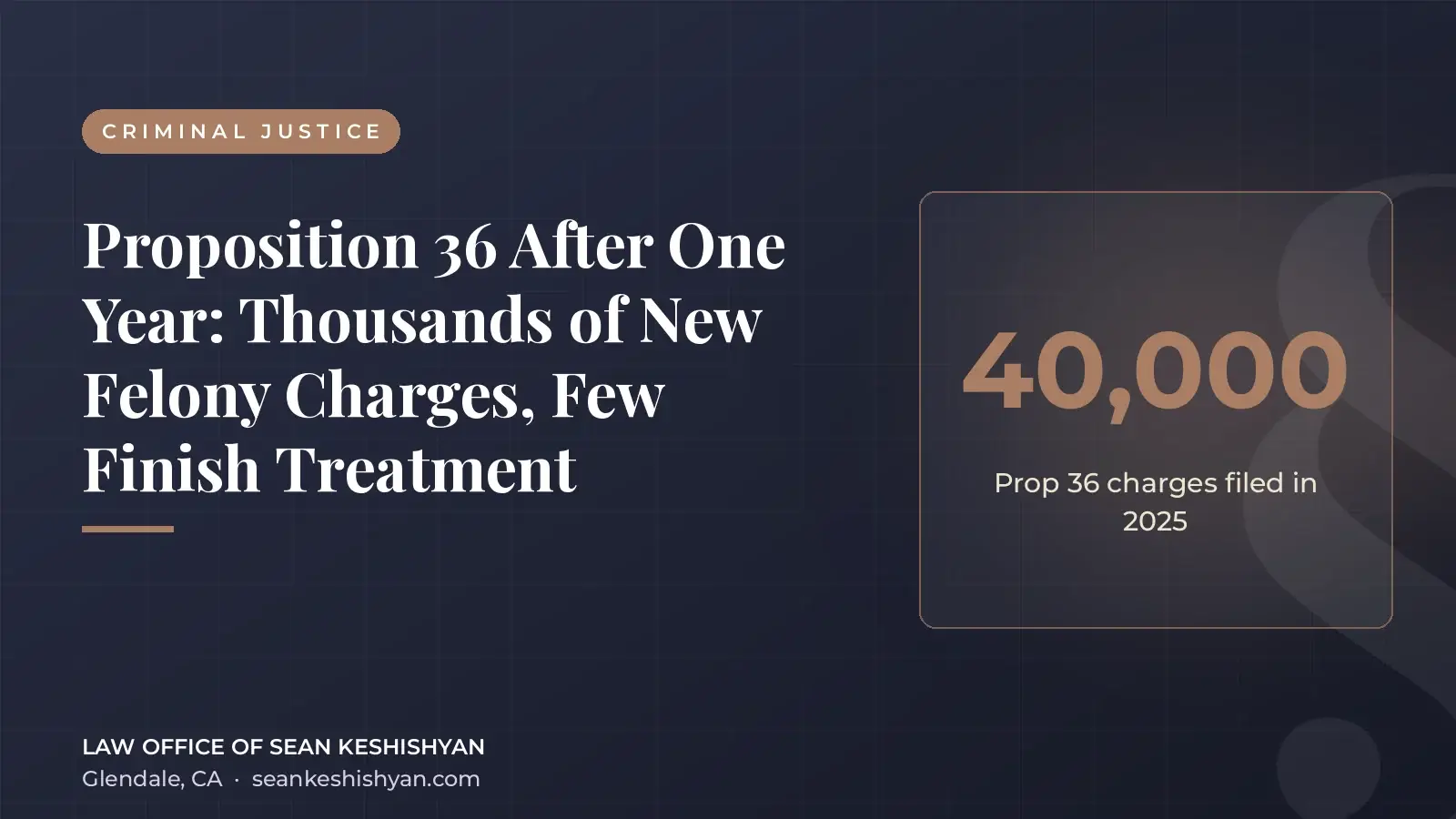
- About 40,000 Prop 36 charges were filed in 2025, and nearly 900 people were sentenced to state prison.
- Very few defendants have completed treatment. In the first months, 25 of about 9,000 charged had finished.
In November 2024, California voters approved Proposition 36 by a wide margin, and it took effect on December 18, 2024. The measure rolled back parts of 2014’s Proposition 47 by allowing prosecutors to charge certain repeat theft and drug offenses as felonies instead of misdemeanors. One year later, new studies show how it is playing out in courtrooms across the state.
What Proposition 36 changed
- Repeat theft: People with prior theft convictions can now face felony charges for new thefts, even when the value is low.
- “Treatment-mandated felonies”: People with repeat drug-possession convictions can be charged with a new type of felony. They can choose substance-use treatment, and if they complete it the charge is dismissed. If they don’t, they can face up to three years behind bars.
The early numbers on treatment
A first-of-its-kind study by California’s Judicial Council, reported by CalMatters in October 2025, looked at the first months of the law (December 18, 2024 to April 30, 2025):
- About 9,000 people were charged with treatment-mandated felonies.
- 1,290 (about 15%) chose treatment.
- 771 were actually placed into a program.
- Only 25 had completed treatment by the end of the study period.
Funding is a big part of the story. Supporters asked for about $600 million a year to pay for treatment and courts; the state approved a one-time $100 million, and the governor later announced $127 million in grant funding.
A year of arrests and sentences
A March 2026 analysis by the Center on Juvenile and Criminal Justice, a criminal-justice reform group, reviewed the first full year of data. It found:
- Roughly 40,000 Proposition 36 charges filed in 2025.
- Nearly 900 people sentenced to state prison on Proposition 36 charges between January 2025 and January 2026, most for theft rather than drug offenses.
- County jail populations up by about 2,600 people between November 2024 and November 2025.
- Only about 0.3% of drug felony cases ending in dismissal after the defendant completed treatment.
Big differences from county to county
Where you live matters. The same analysis found that Orange County, home to about 8% of Californians, accounted for nearly one in five Proposition 36 charges and about 40% of the state’s Proposition 36 theft convictions. Other counties have filed far fewer cases, which reflects different choices by local district attorneys and different treatment capacity.
The debate continues
Prosecutors and retailers point to the law as a needed tool against repeat theft. Public defenders and reform groups argue the treatment side has been underfunded, so the law has mainly increased incarceration. Expect Proposition 36 funding to remain a major issue in Sacramento as more data comes in.
Hurt by someone else’s crime or reckless driving? A criminal case and a civil injury claim are separate. Even when the state prosecutes the person responsible, victims may have the right to seek compensation for medical bills, lost income, and pain and suffering. The Law Office of Sean Keshishyan in Glendale offers free consultations for injury victims. Call (818) 246-6934 or send us a message.
This article is for general information only and is not legal advice. Reading it does not create an attorney-client relationship. Laws change and every situation is different. Please speak with a qualified attorney about your specific circumstances.