Key takeaways
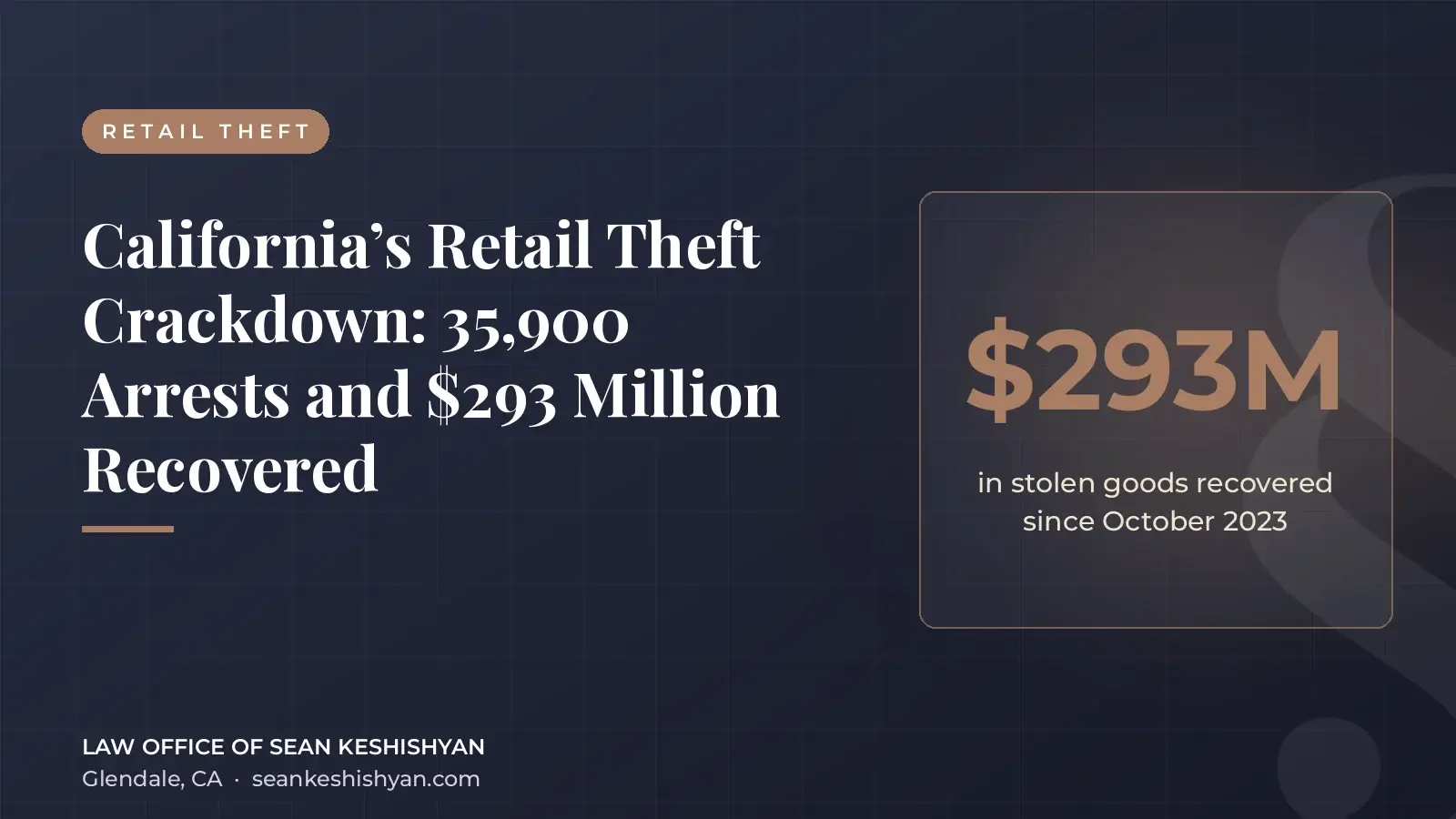
- Since October 2023, state-funded enforcement has produced 35,907 arrests and $293.4 million in recovered goods.
- 28,667 cases have been referred for prosecution, and 13 DA offices report 1,062 organized retail theft convictions.
- Robbery fell 19.9% statewide from 2024 to 2025.
California’s multi-year push against organized retail theft is producing large numbers. In a September 3, 2026 update, the Governor’s Office reported that state-funded local enforcement since October 2023 has resulted in:
- 35,907 arrests
- 28,667 cases referred for prosecution
- $293.4 million in stolen property recovered
In the most recent quarter alone, agencies reported 3,294 arrests and 2,824 cases referred to prosecutors.
Where the money went
In 2023, the state awarded $242 million to 38 local law enforcement agencies through the Board of State and Community Corrections to fight retail theft. A separate $24 million went to 13 district attorneys’ offices for “vertical prosecution,” where the same prosecutor handles a case from start to finish. Those offices report 3,027 theft-related convictions, including 1,062 organized retail theft convictions and 885 felony convictions.
The California Highway Patrol’s Organized Retail Crime Task Force, launched in 2019 and permanently expanded in 2022, continues to run investigations across county lines.
Tougher laws behind the numbers
Two legal changes give prosecutors more tools:
- Aggregation of thefts: Under Penal Code 487(e), prosecutors can combine the value of multiple thefts to reach the felony threshold, which targets people who repeatedly steal smaller amounts.
- Proposition 36: Since December 2024, people with prior theft convictions can face felony charges for new thefts regardless of the amount taken.
Part of a broader decline
The enforcement push comes as overall crime is falling. According to the state’s 2025 crime data, robbery fell 19.9% and property crime fell 14.3% from 2024 to 2025.
When theft turns violent
Most retail theft involves property, but some incidents turn dangerous, and customers or employees get hurt. When a store fails to take reasonable security precautions against foreseeable crime, an injured person may have a premises liability claim against the property owner, in addition to any criminal case against the offender.
Hurt by someone else’s crime or reckless driving? A criminal case and a civil injury claim are separate. Even when the state prosecutes the person responsible, victims may have the right to seek compensation for medical bills, lost income, and pain and suffering. The Law Office of Sean Keshishyan in Glendale offers free consultations for injury victims. Call (818) 246-6934 or send us a message.
This article is for general information only and is not legal advice. Reading it does not create an attorney-client relationship. Laws change and every situation is different. Please speak with a qualified attorney about your specific circumstances.